

In partnership with JCDecaux.
In this exclusive interview with ExchangeWire, Dom Kozak, head of programming at JCDecaux, asks if the industry has lost the basics of advertising and how branded media is evolving to deliver results in the advertising space.
With all the technology and information, have we forgotten the basics of marketing?
The goal of any advertising campaign is and always will be to attract attention and influence attitudes and behavior. No matter what you sell, if you don't do anything when they find it, you're introducing people who don't care.
The 1974 JWT planning cycle illustrates this point, and I often refer to it when discussing campaign planning.
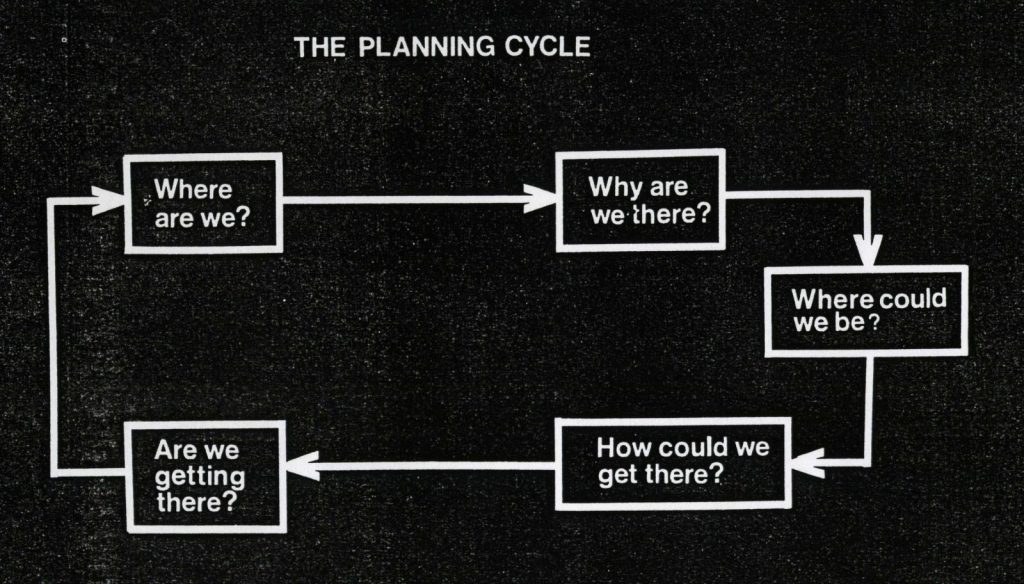
While these fundamentals haven't changed, information and technology have changed how marketers determine the best opportunities to reach their most receptive audiences, how to buy the media with which those audiences are most engaged, and how to measure success.
How can media be transformed to build a brand for meaningful results, and what does this mean for marketers when thinking about marketing strategy?
Brand building media is evolving into a full media driven by information and technology. For example, take TV, audio and outdoor advertising;
- The invention of smart TVs, streaming devices, and Internet-connected TV boxes has enabled broadcasters and other television content producers to collect user-level information about their viewers, use that information to create audience segments, and then create personalized advertising solutions. . Brands:
- It's the same if you prepare for programmatic audio and podcasts and other streaming services like Spotify, and additional audience data in a DOOH program that may overlap during the campaign planning process, such as Dunnhumby user data or airport data. Audience information. . . as well as contextual cues such as weather.
All of the above transform these traditional brand building channels from pre-bookable channels to channels that can be activated immediately, making them work within the fund.
For marketers, this means that traditional campaign planning must span multiple channels, and acquisition methods must be compatible, meaning all channels must be available at the same time. Buy on the same platform with your DSP on the demand side).
In terms of measurement, marketers should consider expanding multi-channel measurement, attribution and economic modeling so that data used for planning is reflected in performance measurement; Otherwise, you won't really understand the impact of each channel. .
When you look at the ecosystem as a vendor, you see a lot of moving parts. Tools and processes have changed forever. There's always the next big opportunity, platform, tool or data to get excited about. It's important to remember that marketing success depends on transparency and consistency across all touchpoints, and as touchpoints proliferate, and most are digital, it can break ties with traditional channels. . Digitizing these channels helps brands achieve the level of consistency they need.
How useful is prDOOH in the upper, middle and lower funnels?
PrDOOH is based on location and contextual targeting, which are at the heart of OOH, so when it comes to thinking about the different stages of the funnel and the relevance of prDOOH, we need to look at the best data integration options for guidance. to the desired result.
But first, it's worth noting that there are prDOOH strategies that deal with noise. For example, if your target audience is only in a certain location on a certain day, the algorithm allows you to increase your spend per day and reduce waste.
Upper funnel. level of awareness
Raising awareness drives attention, and this is where algorithmic tactics help marketers refine their messaging and run alternative creatives in different locations to reflect market demographics, sentiments and mindsets.
Additionally, mobile location data can be used to trigger weighting campaigns or budgets when your target audience exceeds a certain area. This allows brands with small budgets to run campaigns across the country and achieve high visibility without spending tens of thousands of pounds.
Half of the funnel. level of thinking
The evaluation phase is about building consumer confidence that your product or product can meet their needs, whether practical or aspirational, such as sustainability. Research from Clear Channel and JCDecaux shows that outdoor advertising is the best way to build trust and gain attention.
If we talk about software applications, then there are many of them. For example, we know that consumers trust customer reviews, and the fresher and more relevant the review, the more impact it has on the review. Software pipelines can be used to dynamically enter reviews of your product into DOOH Creative, and you can increase relevancy by adding the reviewer's name and location.
Bottom funnel. purchase stage
There are several methods that brands can use to encourage prDOOH purchases. The most obvious is when you want to drive traffic and consumers include location information near you, such as QR codes that direct your products and consumers to your website.
When thinking about these apps from a prDOOH perspective, you want to think about how your audience moves; When are they in places where they can operate? Also consider external factors influencing your decision. For example, is your audience more or less likely to buy your product in good or bad weather, do you have more or less attractive products depending on the time of day? Use this information to develop an algorithmic innovation optimization strategy to get the most out of your budget.
Establishing new channels can be difficult. establishing a new marketing initiative means a close relationship with the CFO. If so, how can it be made better?
First of all, it depends on the type of relationship you have with the CFO. No matter what's going on in the world or in your business, walking into the CFO's office and blindly asking for a quote never works, and it's irresponsible.
It's every marketer's job to make sure that effective marketing gets the best results and that your investment moves the needle. It's important to make sure you and your CFO speak the same language and share a common vision. Without it, you can never open the budget.
Another potentially important issue is whether there is a tension between innovation investment and proven pathways. You may have a good relationship with your CFO based on consistent evidence that your marketing is paying off, but if you're repeating the same plan year after year, that relationship won't be enough to get a budget for new business.
How important is cross-channel measurement and attribution, and how can marketers ensure each channel is properly represented in terms of their contribution to campaign results?
Today, performance measurement is non-negotiable, and without the ability to measure, new channels will not open. The measurement of a single channel itself is relatively simple and many parameters can be applied.
But marketing channels do not exist in one. In reality, consumers are exposed to multiple channels every day, and there is no magic formula that can calculate the level of each exposure that affects the resulting behavior. This makes cross-channel behavior extremely important.
Even if it's not easy. In online marketing, we see many click attribution models, which of course have their place, but do not take into account the contribution of offline channels. To combat this, many traders turn to economic modeling, but this requires a lot of expertise and time, which means opportunities can be missed in today's fast-paced world.
To complicate matters, many marketers are obsessed with the idea that media channels fall into one of two categories when it comes to goals and metrics: brand or performance. This is where TV channels and OOH are traditionally seen as branded channels, but programmatically bought channels are often unfairly valued because there is an unrealistic assumption that they should be equal to channels like online video because they are bought programmatically. .
With prDOOH, it's important to set realistic expectations for what you'll find in measurement data outside of "standard" DOOH. The "test and learn" approach is common among them.
Because it allows newbie channel marketers to explore multiple strategies in a fast, flexible and quantitative way. At the end of the day, prDOOH is still outdoor advertising without click-through or view-through rates, but marketers are trying to find ways to measure its impact on the performance of other channels.