

The Arab Spring protests began on December 17, 2010.
For two years, the dictatorial governments of Tunisia, Libya, Egypt, Yemen, Syria and Bahrain have challenged their long-oppressed peoples.
This chain reaction also caused uprisings in Morocco, Iraq, Algeria, Lebanon, Jordan, Kuwait, Oman and Sudan.
The ability of social media to mobilize and catalyze individual experiences in real time has been instrumental in empowering the masses to address perceived injustice.
Then, on the other end of the spectrum, you have inappropriate misinformation.
Thus, in the blink of an eye, social networks go from hero to villain.
And this is one of the reasons why social media marketing is still underrated (at best) or destructive (at worst).
To understand how to do social media marketing the right way, you first need to understand what social media is (and isn't).
Social media is a generic term for any interactive digital community. For example, Twitter is a platform that allows people to exchange short messages and multimedia links with others. Facebook, on the other hand, is a true social network where users share updates, photos and videos, join events and groups, and more.
Social media marketing is the use of popular social media platforms to connect with your target audience and promote your brand's products and services.
There is nothing new in marketing.
For example, "content marketing" may be all the rage right now. But that's been around since 1900, when tire company Michelin (with a "y") created the Michelin Guides to encourage tourists to drive more by trying different restaurants in France.
To reserve Tribute to restaurants and chefs. Created by a tire company. More tires to sell.
It's very similar to what we all do today!
Incredibly, John Deere's Furrow predated its arrival in France by five years, first published in 1885.
Social media is no different.
Social media hasn't changed marketing. This is not a new thank you. The principles of building an active user base on TikTok are not that different from those used on AOL fan pages nearly two decades ago.
Of course, some obvious things are different. The technical rules have changed a lot. The rules of participation are different. In other words, the way tactics are applied has changed.
To better understand your social media marketing strategy, look at it through the same 1960s perspective based on the 4 points you learned on day one of Marketing 101:
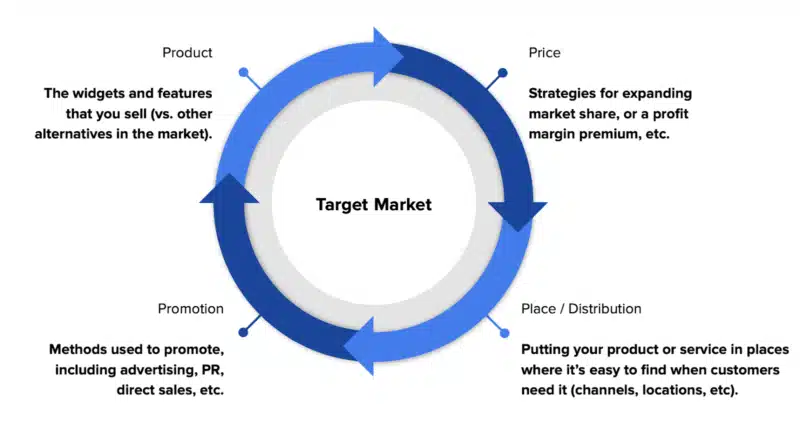
Most marketers today focus on the following two P's to achieve their business goals:
- Promotion - includes different ways to generate interest in your business including advertising, PR, direct sales, word of mouth and more.
- Localization/Distribution : Strategically position your brand in the channels your ideal customers will be exposed to.
A social media marketing plan is a combination of two classic marketing principles that have been around since the days of advertising.
Social media marketing is an interactive online water cooler that works 24/7 in every time zone on the planet.
You can use it to build awareness, create and spread real word of mouth (which used to and still happens offline) while building loyalty to your organization.
So it's not "new" per se.
Social media marketing takes things that have already existed for decades, like a town square in a feudal state centuries ago, and combines them with merza to amplify the same conversations that take place in every other city in the known world.
This can be confusing or off-putting to older generations who see "real life" and "social media" as two very different mediums. However, young people generally do not share the same opinion.
Imagine the impact of this quote in a recent Financial Times article. China, which actively monitors and censors alternative social networks such as WeChat, recently began cracking down on "thousands of protesters" online, blocking them permanently.
Here are the dire consequences of this decision from an anonymous commenter:
“Getting rid of your social media presence is torture. I lost touch with a lot of people. I lost my memories. I've lost my chances."
At its most extreme, social media is like an extension of your offline life. It's a digital identity that connects channels or media, connecting everything from Gmail to Apple Pay to blogs and YouTube.
Social media marketing perfectly aligns the brand's business goals with the behavior of the younger generation.
60 years ago, if you wanted to promote your widget, you focused on:
- Television advertising on various channels.
- Advertisement on local radio stations.
- One of two newspapers in your city.
- Mailing directories.
How did it happen?
Because the eyes of generations have been fixed there and it has resulted in a willingness + ability to spend their hard earned dollars.
But today?
Most of these industries are languishing, dying a slow and painful death. At the same time, teenagers literally cannot stop watching YouTube or stop moving every day. More British teenagers watch Netflix than the BBC.
We'll once again turn to old but useful marketing classics (earned, native, and paid) to illustrate how social marketing fits into a broader promotional strategy.
Social media is still in the "earned" camp because, while it doesn't require much personal expense, you do have to roll up your sleeves.
And when combined with "proprietary" channels like your existing customer database or "paid" ad and opinion sharing offers, you can drive awareness or increase sales for far less than any Super Bowl ad. you run
Social media marketing also improves the search experience (SEO, visibility on any social network, voice device recommendations, etc.).
Social networks are essentially platforms for sharing content and information.
Each platform has its own search function that allows you to search for anything at any time. This means:
- You can specifically optimize what you share so it can be found again and again.
- This data can also be pulled later for recommendations - not just searches in this app, but from other apps and networks (think: Alexa voice commands and more).
This is a hurdle because it means you have to optimize your content differently depending on where you publish or distribute it. Meaning:
- Facebook : now a B2C mass market community, over 30 generations old.
- Instagram is a mobile-oriented and visually appealing way to share photos or images.
- LinkedIn : B2B discussions, surveys and knowledge sharing.
- Pinterest is a favorite app for bookmarking and to-do lists.
- Snapchat : "Exclusive", short temporary videos.
- TikTok - short funny, inspirational or educational videos.
- Twitter : Fast and accurate exchange of information and links with a relatively short half-life.
- YouTube is the de facto video sharing platform for short and long-form content.
Now that you know why social media is so effective, let's look at the top five benefits that make it one of the best investments of your time and money.
Get the daily newsletter that search marketers rely on.
Social media marketing has obvious disadvantages.
First, you can't force feed people sterile, canned messages like you did before without expecting some kind of response. Or what worked tactically on one channel yesterday is almost guaranteed not to work on another tomorrow.
Fortunately, the positives outweigh these negatives.
Here are the top five benefits of social media marketing.
1. The growing influence of social networks on search results
Facebook now has a saying that can be applied to almost any other social channel.
People don't go to Facebook (or TikTok, or LinkedIn, etc.) for work. They go there not to work.
Therefore, one of the characteristics of social networks is possible intuition.
You might find something you weren't originally looking for or see recommendations. So while social media is great for research, that's why social media often doesn't hit the box office as hard as search.
The good news is that research is increasingly being transformed and reformed on social media.
Most marketers have heard that YouTube is the second largest search engine on the planet. And it is correct. But that doesn't match the full assessment either.
First , all your search results are personalized. Previous web pages you've visited, videos you've watched, questions you've asked, and other connections you've made through the same digital identity that connects them all (such as your gmail account) have an impact.
Search engine results pages (SERPs) are also mixed, showing different types of media depending on the query or queries entered.
For example, type in a recently concluded sporting event, such as Liverpool (good guys) vs Manchester City (bad guys), and you'll instantly get YouTube recommendations including highlights, interviews, post-match reactions and more. other
Note that this comes before a traditional ad or text link.
But that's not all.
Keep scrolling and the second organic position is a search for Twitter, which sucks endless content into its firehose and has the most respected journalists and editors.
ROI research is one of the most effective marketing channels in the world. It's not even close because people put in what they want and then you can show it to you.
Now guess what continues to influence search results more and more? social
2. Multi-format user-generated content
Remember what Google search results looked like. Ten blue ties. Sometimes up to three ads. And that was it.
Their goal has always been to provide the best answers to your questions as quickly as possible.
This has also evolved in recent years. You now have click-free search results, where Google provides instant answers, without the search engine having to worry about digging deeper.
So why paste the YouTube results from the previous example or the Twitter search box?
Because Google has realized that people want to read real-time discussions about people's opinions on certain types of questions, and not get a link to another nameless, faceless company page.
Now they know that if you are looking for "reviews", you are really looking for comparisons, tutorials and tutorials, which means that the best "answer" in this case is not a boring text article, but dynamic videos that go by. from one narrator to another - screen displays.
This is even more effective when it comes not directly from your brand, but from other influencers who endorse products or services on your behalf.
In the example below, Cuts Clothing could use Patrick Mahomes' halo effect and let him sell his custom content on social media.
3. Different types of content increase faster and faster
Don't shoot the messenger.
But the vast majority of people and companies will never go viral.
It is for these dreams:
- Some big brands with high leverage.
- Those who are lucky when the stars meet once in a century.
- Or those unfortunate souls who do things so silly or stupid that they become eternal memes and gifs.
So let's stop saying "viral" and call it "amplification" instead. Here is a perfect example.
Len Marchidan is a good salesman and a nice guy with a funny sense of humor. Nowhere was this more evident than when he updated his LinkedIn profile to satirically show how he "works" on various social platforms because they all, quite frankly, steal his data. (More on this in the next tip below).
A few days later, his "updated resume" went viral on LinkedIn, much to the delight of other nervous SaaS marketers.
Reaching several thousand people in this way is not "going viral". It wasn't epic and it didn't become a legend overnight. But this is a good start.
And this is a perfect example of how you can use the network effects of social media platforms to spread relevant/funny/persuasive/interesting/surprising/moving messages if you know how to use the right tactics at the right time.
4. Customer data improves ROI
Contrary to popular belief, social media campaigns are not "free".
It's true, cheap (enough). Compare the CPM or CPC of LinkedIn ads to billboards or TV and we're talking night and day.
One of the reasons why social media advertising is so much cheaper is that you can target exactly who you want to reach and thus avoid overspending on small things that don't benefit you.
If you want to advertise on the radio, they can give you some zip codes and mostly useless data like family income.
If you want to advertise on LinkedIn, you can specify specific positions, roles, and positions in the target market you want to reach. You can also look at business charts to find out the company's size, growth rate, and other additional questions to help determine if they can afford your supplement (or not).
Today, context influences purchasing behavior by helping to better understand:
- The specific problems that someone is dealing with hold back.
- While they are currently trying to fix or eliminate these issues.
- That's why your widget is better for them than other alternatives in the market.
In other words, context is what drives everything from ad placement to creative. And context comes from customer data, knowing (almost) exactly who they are, what motivates them and why they choose to act (or not).
You can then create custom segments of these people based on your statistics, such as whether they've used your tool before or visited your site just once, without proof or asking for a sample.
And you can target that context at an ever-increasing scale to deliver the right messages to the right audience at the right time.
5. Building a Proactive and Reactive Audience
Once you know how social media marketing should work based on classic marketing principles and how much more profitable it is than other alternatives, you can know exactly how to start using it to its full potential.
At 30,000 feet, you can start to divide yourself into two different strategies: active and reactive.
Proactive social media posts help raise awareness of your target audience and stay in the spotlight for everyone from casual fans to die-hard fans.
The trick is not to create social media posts, but to make them an extension of your current content strategy.
Create exploratory content for your website or blog, or themed content for more general social media-friendly content. You then take those raw materials and mix, cut, edit or reassign them for each respective social channel.
Everything is pre-planned based on your biggest marketing campaign or launch that addresses all your customer touch points (eg website, blog, email newsletter, etc.).
And then the reports can tell you not only how many engaged people you've covered, but more importantly, the level of audience engagement (such as the reaction to a post or caption).
On the other hand, reactive community management can help you attract, develop and spread those messages to an ever-growing audience.
That's why you want to do your customers a favor, pay attention to each of your customers.
The trick is to move from superficial, easily shared reading cheesiness, such as "follower", to intellectual leadership in KPI and marketing.
First, in the last time he is very popular in marketing in social sciences, which is very popular.
Complete the Google Search Console search and select the following clicks in the control period. What is the point of talking about this in the first period (for example, in the first quarter) on the topic of the next week.
And since it's difficult to sell directly through social networks (see Intuitive understanding compared to search above), you can also look at leading indicators such as newsletter subscriptions, event registrations and other more intermediate offers to find out how well you are doing. will be ready to stimulate sales in the near future.
Platforms of social networks are not modified by marketing.
В то же время, больше успеча, otherwise, this is what classical marketing is known for, according to their own words.
Marketing in social societies is connected with the production and distribution of self (or distribution) class 4Р and is one of the best examples of the "use" of medicine.
In addition, productive search, multi-format and multi-format research, carbon fiber, data and audience location can also act as ego-drive of the best of the underprivileged.
Yes, how you tactically increase the number of subscribers on Instagram is different from how you optimize your video for YouTube promotion, which is also different from how you can leak to us.
In the world of simple, uncomplicated, highly effective marketing, highly qualified bloggers spread business without any silicones.
This is not a case of marketing in social networks, which is not used in any way.
The opinions expressed in this article belong to the invited author and not necessarily to the search engine. Authors of the state are listed here.
New in the search system