
- The CRM funnel reverses the path of the sales funnel by tracking when they become a paying customer.
- CRM funnels help salespeople close sales automatically by informing them about customer needs and behaviors.
- Sales automation at every stage of the CRM funnel can increase efficiency and increase sales.
- This article is for small business owners who want to improve their sales with CRM software.
Your business depends on your customers and the relationships you build with them. Understanding how you communicate with others is essential to increasing brand awareness. These relationships depend on maintaining relationships and relationships with your customers. Customer Relationship Management (CRM) helps you develop and manage leads, grow your customer base and grow your business.
Editor's Note: Looking for the right CRM software for your business? Please fill out the form below so that our supplier partners can contact you regarding your interests
What is a CRM Funnel?
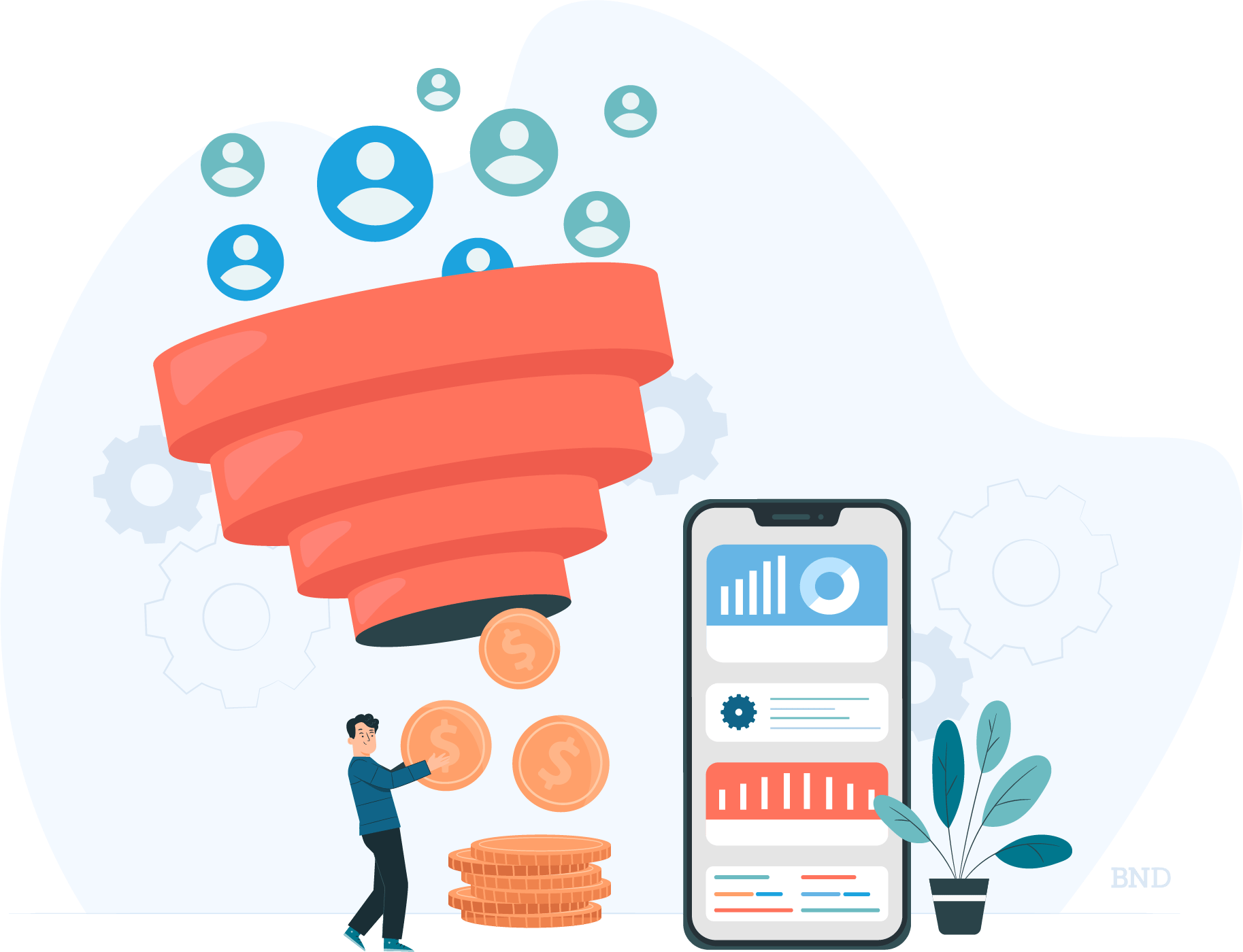
A CRM funnel is a method (and software) for tracking and communicating with existing and potential customers. It allows you to track sales history, conversations, promotions and other elements of customer interactions. This makes it easy to identify potential customers and those who are not interested in your offerings.
CRM funnels are similar to sales funnels designed to attract and convert customers. It allows your business to track and manage leads and determine the next step at each stage of the funnel You can use Sales Funnel to create a CRM funnel that works within your CRM tool to automatically track your prospect progress and then nurture and engage leads on their journey to becoming a customer.
Key Tip: The CRM funnel reverses the sales funnel and collects data on prospects as they approach paying customers.
What are the four stages of a CRM funnel?
The CRM funnel consists of four stages that mirror the stages of the sales funnel.
Consciousness
The first step on the CRM path is understanding. This happens when a potential customer develops an understanding of your business and your product or service. Awareness can be created in many ways, such as through email marketing, online and offline marketing campaigns, and social media. For example, potential customers may learn about your company's offerings while searching the Internet for their problem.
desire
This is the secondary percentage of the CRM funnel. Potential customers show interest in your product or service when they contact you through your website or follow you on social media. They can also provide their email address in exchange for a webinar or e-book.
solution
CRM Funnel is a third level solution. A potential customer is planning to buy your product or use your services. They evaluate its capabilities by comparing its price and features with its competitors. The sales team can contact potential customers to see if they are ready to buy.
job
This is the last step in the CRM journey. Either a potential customer decides to become a customer and goes on to complete the purchase of your product or service, or they reject your offer and never become a customer.
Key Tip : As leads convert from awareness to action, CRM software collects data to support your sales and marketing teams' efforts to convert customers.
How CRM automates sales at every stage of the funnel
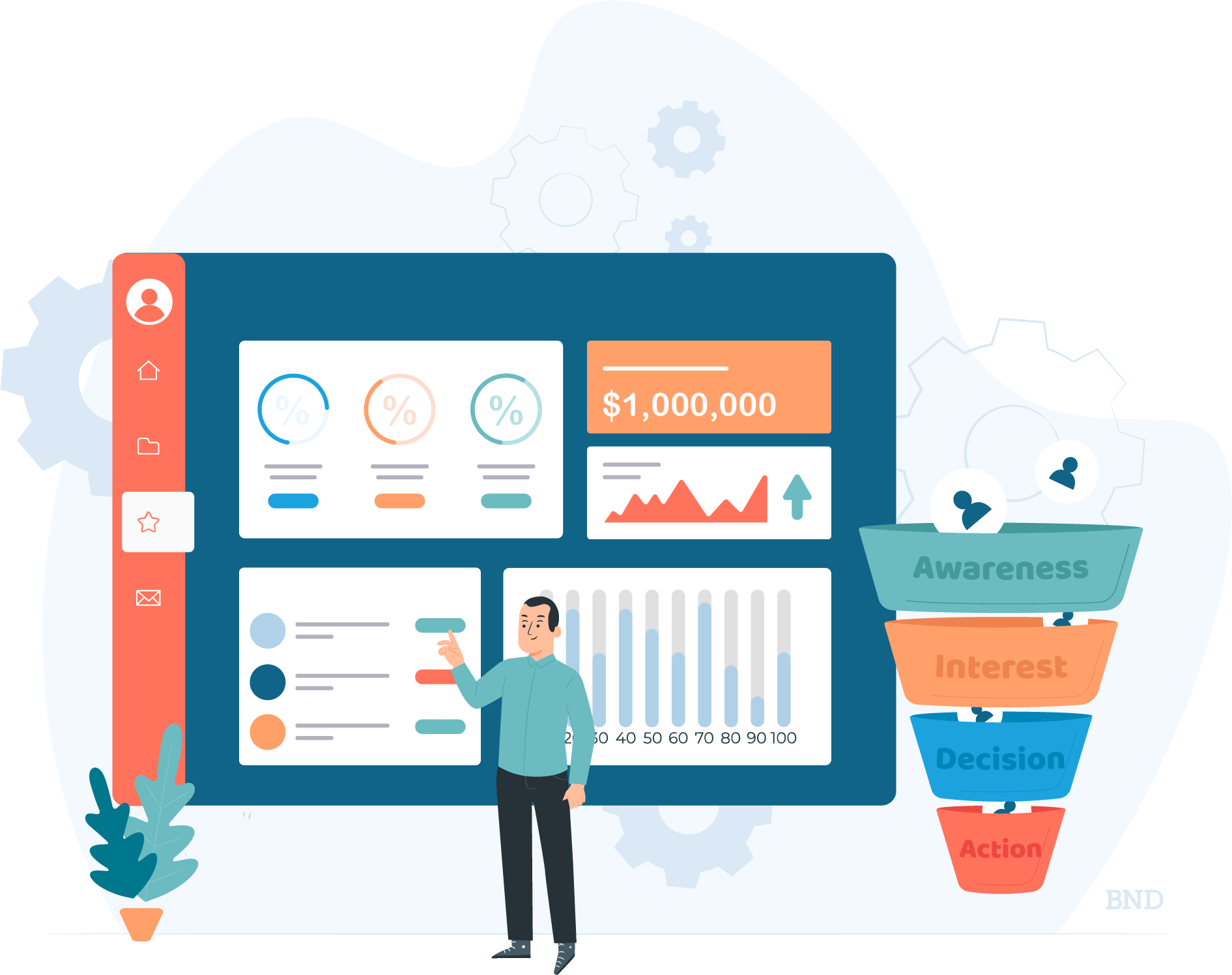
CRM can automate the closing funnel process and help increase your business revenue. It can also provide the following benefits:
- The CRM path helps your business deliver your services in a way that meets the needs of your customers Since your CRM has information about customer issues, you can use it to improve customer relations and improve customer service.
- Your CRM contains data that helps you understand your customers' behavior. You can use CRM funnels to deliver products or services to customers when they need them or when they are ready to learn about them. This will help you identify the most profitable customers and streamline your sales process so you don't waste time on unprofitable customers and customers who are unlikely to convert.
- A CRM funnel can help your business increase sales by using data collected about existing and potential customers.
Follow these best practices for sales automation at every stage of the CRM funnel
Awareness = Inquiry
You use various social networks to communicate with customers. You can use CRM's social media integration to track interactions with these potential customers It will help you listen and interact with customers by building relationships through social media.
Every conversation with a customer (via chat, email, cold call, etc.) is an opportunity to generate leads. You can also use customer questions, reviews and complaints to find out what matters to your audience. Your customer service team can enter this information into your CRM software, and your sales team can use the data to identify additional sales opportunities or request referrals.
Your CRM will organize your leads so it's easy to contact and communicate with them. You can then break it down into categories (such as region, industry, role, and income) using CRM. It allows you to create marketing campaigns and messages tailored to specific customer segments.
Interest = qualified prospect
Before spending time researching leads, identify the leads most likely to become customers Use a CRM to score leads based on potential lead value and likelihood to convert to customers.
How you evaluate potential clients depends on what is most important to your business. For example, you can categorize leads based on their contact information, company details, lead source, or other factors. Your CRM uses variables defined in formulas you design to assign numerical results to specific leads. You can filter the rating from highest to lowest and zero to the top of the list.
Some potential clients are no longer eligible after qualifying. Use a CRM to find out why you don't qualify. For example, a potential customer may not appreciate your product or service, or may not need it right now. You may have called the wrong company contact. Include these reasons in your CRM so you can respond later or remove them from the list.
Use a CRM to track potential customer interactions. Determine how often a potential customer contacts someone in your organization, the reasons for speaking, and their questions or concerns. Integrating your email account with a CRM allows you to log these communications so you can filter key data and metrics (such as email opens and responses). Tracking the relationship with your audience will allow you to determine other important information such as key decision makers within the company, your audience's budget and the value of your product or service to the audience.
Resolution = Quotations from potential clients
CRM contains a lot of information about customers and prospects who have reached this stage. Before quoting or negotiating, review customer CRM data (such as customer profiles and recorded calls with them) to gain actionable insights and customize the experience.
For example, during a phone call, you can respond to the predictions described above in an email conversation It shows that you understand customers' problems and pain points and are interested in meeting their needs.
Use CRM software to increase efficiency by setting task reminders for specific days and times. You can set follow-up tasks and reminders for contacting leads and assign tasks to leads or contacts. Stay organized by identifying deadlines, setting deadlines for proposals, and adjusting those deadlines when prospects don't respond within a certain time frame.
You can also use CRM software to track the activities of other salespeople in your organization. Publish activity reports to track deals entered into, opportunities missed, calls and emails made, appointments made and closed, notes taken, appointments with potential clients, and more. You can segment activities, view call and email results, and decide which reps will (or won't) move deals to the next stage of the conversion funnel.
Action = Close the deal
Use CRM sales forecast reports to track the progress of transactions in your sales pipeline. Estimated closing date and probability of closing for each business. If closing the deal is impossible, you can identify the reasons and identify solutions to help close the deal.
Evaluate sales funnel and CRM process effectiveness. Determine where to stop or abort operations. Use the Stage Duration Analysis feature in CRM to determine how long a transaction will take at each stage of the pipeline. Look at your historical data on successful and unsuccessful trades to calculate the probability of a trade being closed. Post reports to see which reps are closing at the lowest rates.
For example, the sales funnel analysis report allows you to compare the number of deals closed with the plan to close. This will help you prepare and improve future marketing results.
Once you win or lose deals, use CRM metrics to display valuable information about your results (such as win percentage, average sales cycle, lead conversion rate). It allows you to evaluate the best tasks and identify the poorly done tasks
When the deal is missed, write down the customer's details and the reason they missed the deal so you can refer to it later. This will help you identify ways to overcome these factors in the future It can also provide an opportunity to approach the leader in a different way. This will save you time and money so there is little or no chance of your CRM going out.
Key Tip : CRM software is invaluable for automating many tasks at each stage of a CRM funnel. Contextual lead information helps sales and marketing teams convert leads into customers.